

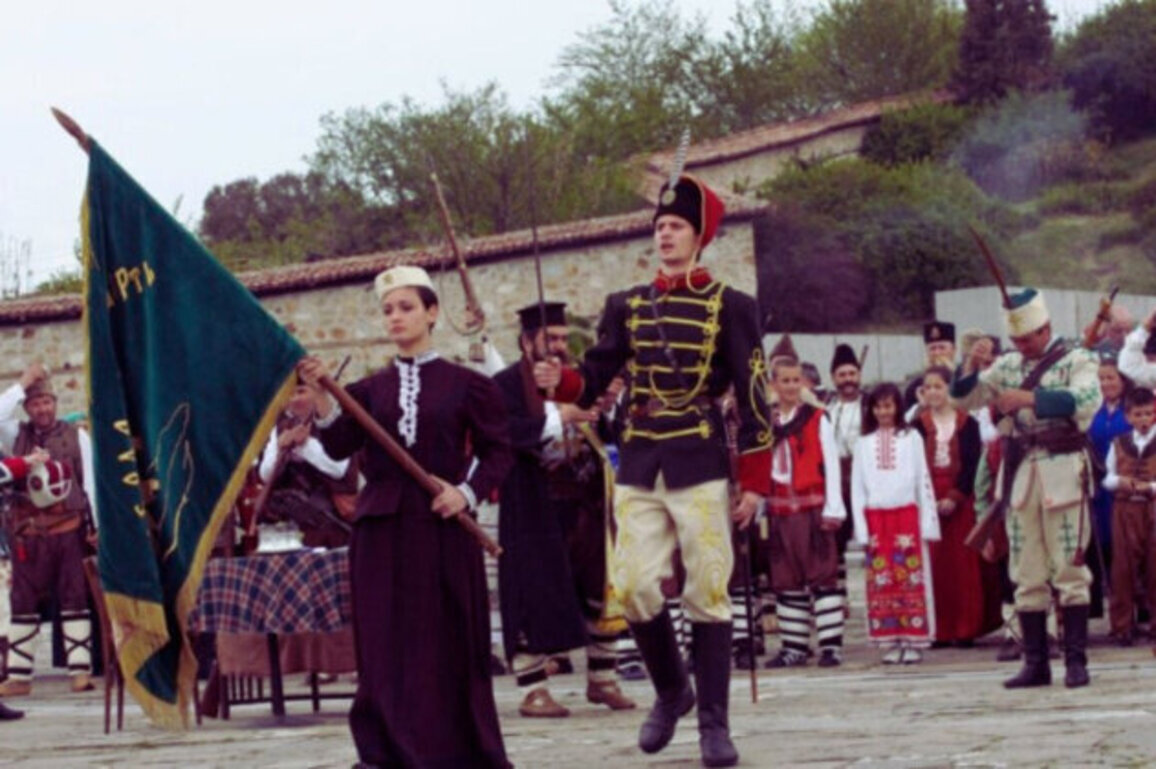
Across Bulgaria today, the country marks 150 years since the outbreak of the April Uprising - one of the most defining and tragic moments in Bulgarian history. Commemorations, historical reenactments, torchlight processions, concerts, exhibitions, student competitions and open history lessons are taking place nationwide to honor the events of April 1876, when Bulgarians rose against nearly five centuries of Ottoman rule.
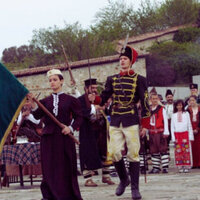
Students across the country are participating in literary and musical programs, school competitions and educational initiatives dedicated to what is often called the ?April Epic.? Although the day is declared non-school, attendance remains mandatory. Torchlight marches are planned in Burgas, Shumen, Targovishte and Panagyurishte, while museum sites in Sliven will offer free entry. In Ruse, the anniversary is being marked with a historical reenactment in front of the Pantheon of the Revivalists.
The central national event is a grand concert in Hall 1 of the National Palace of Culture in Sofia. Soprano Krassimira Stoyanova and violinist Svetlin Roussev will perform alongside the Symphony Orchestra and Mixed Choir of the Bulgarian National Radio. The program includes works by Dobri Hristov, Pancho Vladigerov, Parashkev Hadjiev, Lyubomir Pipkov and Marin Goleminov.
The April Uprising, which began on April 20, 1876, remains the largest and most significant armed rebellion of Bulgarians against Ottoman rule since the fall of medieval Bulgaria in 1396. Though it was crushed militarily, it ultimately succeeded politically, becoming the event that brought the Bulgarian national question to the center of European diplomacy and paved the way for the restoration of Bulgarian statehood after the Russo-Turkish War of 1877?1878.
The uprising unfolded during the broader Great Eastern Crisis, triggered by the 1875 rebellion in Herzegovina against Ottoman taxation and repression. Inspired by these events and the weakening of Ottoman authority, Bulgarian revolutionaries revived the Internal Revolutionary Organization founded by Vasil Levski.
Between November and December 1875, twelve revolutionaries, later remembered as the ?apostles,? gathered in Giurgiu, Romania, and prepared the uprising. They divided Bulgaria into four revolutionary districts with centers in Tarnovo, Sliven, Vratsa and Plovdiv, later moved to Panagyurishte. Their official goal was liberation, but historians note that the more realistic aim was to force Europe to confront the Bulgarian question, even at the cost of heavy sacrifice.
Preparations inside Bulgaria began in early 1876. Funds were collected, weapons secured, ammunition was produced and volunteers were trained. In the Panagyurishte district, considered the best organized, delegates from 58 settlements met in the Oborishte locality and decided the uprising would begin on May 1.
The plan was disrupted by betrayal. Authorities learned of the preparations, forcing the rebels to act early. On April 20 in Koprivshtitsa, local revolutionaries attacked the konak, the seat of Ottoman administration, killing officials and raising the revolutionary flag.
This moment gave birth to one of the most famous documents in Bulgarian history ? ?The Bloody Letter,? written by Todor Kableshkov and sent to Panagyurishte as a call to immediate revolt.
?Brothers!... the flag is waving in front of the konak, rifles are thundering accompanied by the echo of the church bells, and the brave men are kissing one another on the streets... If you, brothers, happen to be true patriots and apostles of Freedom, then do follow our example...?
The letter quickly became a symbol of courage and national awakening. Historian Svetlana Muhova notes that many mistakenly believe it was literally written in blood. According to her, it was likely called ?bloody? because of the dramatic events it described, though a blood-drawn cross may have been placed beneath the text.
Following Koprivshtitsa, Panagyurishte, Klisura, Strelcha, Bratsigovo, Batak, Perushtitsa and many other towns and villages rose in rebellion. A provisional government was established in Panagyurishte.
But the Ottoman Empire responded rapidly and with overwhelming force. Between 10,000 and 20,000 regular troops, supported by artillery and tens of thousands of bashi-bazouks ? irregular Muslim fighters recruited locally ? were sent to crush the revolt.
Fierce battles took place in Klisura, Panagyurishte, Bratsigovo, Batak, Perushtitsa, Dryanovo Monastery and other locations. The rebels, numbering between 8,000 and 10,000, were heavily outnumbered, poorly armed and lacked sufficient military training. Many fought with old rifles and even homemade wooden cannons reinforced with metal hoops.
The uprising was suppressed within a month. Most leaders were killed, executed or forced into exile. Entire settlements were burned. Around 80 towns and villages were destroyed, another 200 were looted, and thousands were imprisoned.
The greatest tragedy came in the massacres of civilians, especially in Batak. Estimates of Bulgarian deaths vary widely, but modern mainstream historians generally place the number between 15,000 and 30,000 civilians. Contemporary reports by US Consul Eugene Schuyler estimated 15,000 deaths, while British diplomat Walter Baring cited 12,000. Muslim casualties were significantly lower, with most neutral observers agreeing they were comparatively limited.
The brutality shocked Europe. More than 3,000 reports, articles and dispatches appeared in major newspapers across Europe and America. Public figures such as William Gladstone, Charles Darwin, Victor Hugo, Giuseppe Garibaldi, Otto von Bismarck, Leo Tolstoy and Dmitri Mendeleyev condemned the massacres and demanded action.
This international outrage transformed the Bulgarian struggle into a European issue. It weakened support for the Ottoman Empire among Western governments and gave Russia the diplomatic ground to declare war in 1877. A year later, Bulgaria's statehood was restored.
Historians describe the April Uprising as the peak of Bulgaria's national liberation movement. More than 100,000 Bulgarians from all social classes took part ? peasants, craftsmen, merchants, teachers, priests, intellectuals and revolutionaries educated abroad who brought with them the ideas of the Enlightenment and the French Revolution.
It became both a national tragedy and a heroic sacrifice ? proof, as many historians write, that Bulgarians were 'socially and politically mature, morally virtuous, self-reliant and worthy of freedom.?
As Lyuben Karavelov wrote: ?Without freedom, not only does no nation have the right to be called a nation, but even man himself? has no right to be called a man.?
A century and a half later, April 1876 remains not only a historical memory, but one of the strongest foundations of modern Bulgarian identity.