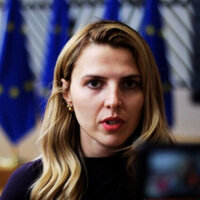


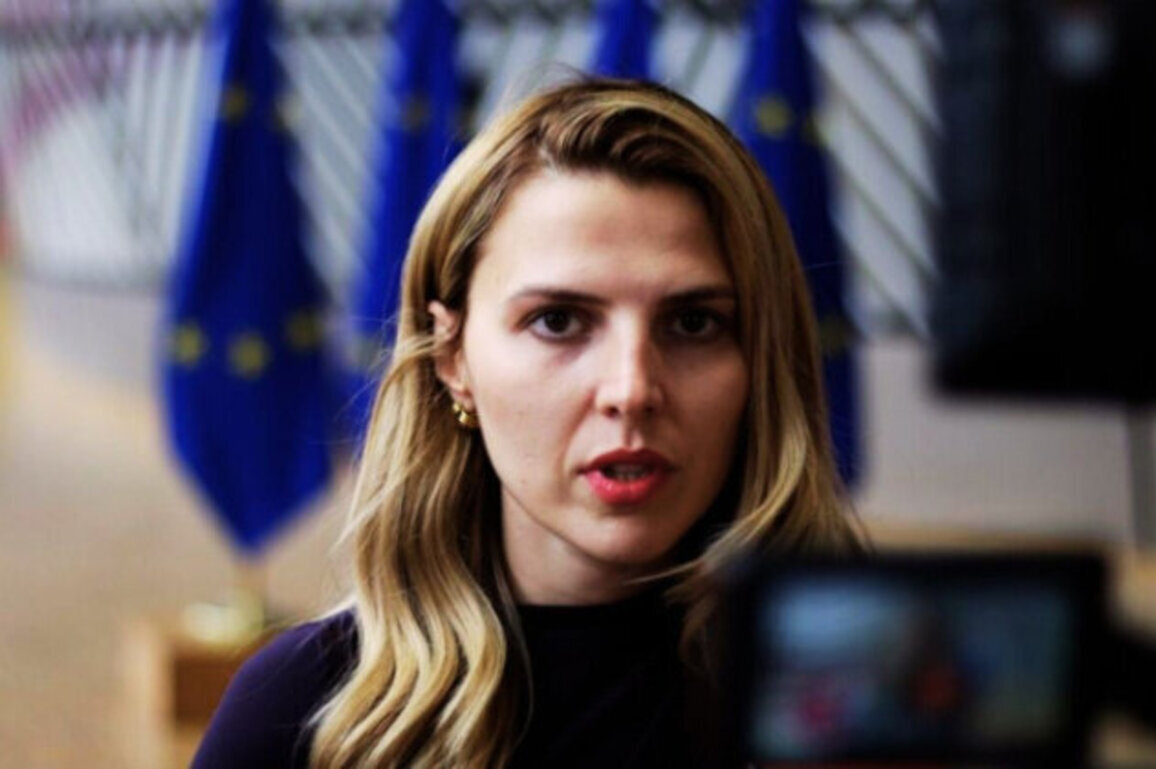
Bulgarian Foreign Minister Velislava Petrova-Chamova used her first meeting with North Macedonian Foreign Minister Timco Mucunski in Brussels to deliver a firm message over Skopje's stalled European integration, stressing that the conditions tied to EU accession are no longer a bilateral dispute with Bulgaria but part of the European Union's official framework.
Speaking after a meeting of EU foreign ministers and a working breakfast with representatives from the Western Balkans, Petrova-Chamova said Bulgaria's position has remained unchanged since 2022, when North Macedonia accepted the so-called French proposal approved by all EU member states.
?This is no longer a bilateral issue. It is a matter between the European Union and a candidate country,? she said, adding that Sofia expects ?concrete actions? from Skopje demonstrating political will to continue along the European path.
The Bulgarian minister warned that the current momentum for EU enlargement may not remain open indefinitely. ?Countries like Montenegro and Albania are moving forward seriously. North Macedonia has a unique opportunity right now, but if it fails to use this window in the coming years, it may actually lose it,? Petrova-Chamova stated.
Her remarks came shortly after Mucunski again called for an end to what he described as the ?bilateralization? of North Macedonia's accession process. Bulgaria, however, insists the obligations accepted by Skopje in 2022 are now embedded in the EU negotiating framework itself.
Under that agreement, North Macedonia must amend its constitution to include Bulgarians among the state-forming peoples before accession talks can formally advance. The framework also requires implementation of the 2017 Friendship Treaty between the two countries, along with the protocols signed afterward.
One of those protocols, signed in 2022 by then-foreign ministers Teodora Genchovska and Bujar Osmani, explicitly states that the next intergovernmental conference with the EU can only take place after the constitutional amendments are adopted. The same document includes commitments related to combating hate speech against Bulgarians, opening archives from the Yugoslav-era services, rehabilitating victims of the communist regime, and refraining from claims regarding a so-called ?Macedonian minority? in Bulgaria.
Petrova-Chamova emphasized that Bulgaria continues to support North Macedonia's EU future, but insisted progress depends entirely on the implementation of the already agreed conditions. ?Bulgaria remains an extremely supportive factor, but we expect stronger activity and fulfillment of the commitments that were made,? she said.
The foreign minister also outlined the broader foreign policy priorities of the new Bulgarian government led by Prime Minister Rumen Radev. She confirmed that Radev's first foreign visit as prime minister will be to Berlin following an invitation from German Chancellor Friedrich Merz.
According to Petrova-Chamova, invitations have also arrived from Italian Prime Minister Giorgia Meloni, French President Emmanuel Macron, and European Council President Antonio Costa. ?The message is clear. What matters is not which country comes first, but that Bulgaria maintains an active policy with key European partners,? she said.
On the issue of Russia sanctions, Petrova-Chamova noted that Bulgaria has backed every sanctions package adopted by the EU so far. She said future measures would continue to be assessed individually, balancing political impact with economic effectiveness.
?Sanctions are useful when they can inflict real economic damage on Russia and reduce the possibility of continuing the war,? she said, adding that coordination with partners such as the United States remains essential for sanctions to have meaningful global impact.
Petrova-Chamova also underlined that Bulgaria intends to remain a constructive member of the European Union rather than a country that merely follows decisions made elsewhere. ?We will not be a destructive partner that undermines European unity, but we will clearly defend Bulgarian interests,? she stated.
According to the minister, Sofia sees opportunities to play a stronger role in areas such as security, connectivity, and energy policy as Bulgaria seeks a more active position inside the EU after nearly two decades of membership.